
01
Feasibility & Project Planning
Define route objectives, landing points, cable type, installation strategy, vessel requirements, schedule, risk register and interface matrix.
Submarine fiber optic cable work requires precise cable handling, vessel coordination, controlled tension, marine positioning, protection of the cable system and disciplined testing. WEB combines field experience with project and logistics management to support installation, repair, burial and maintenance activities.
The company profile confirms WEB experience in submarine fiber optic cable installation, repair, maintenance and cable depot managed services. The detailed framework below expands those services into a complete project lifecycle that can be adapted to the contractual scope, cable system, vessel and marine conditions.
Define route objectives, landing points, cable type, installation strategy, vessel requirements, schedule, risk register and interface matrix.
Integrate marine survey data, bathymetry, seabed conditions, hazards, crossings and burial assessment into the installation and protection plan.
Coordinate project documentation, marine access, local stakeholders, landing activities and regulatory interfaces required for execution.
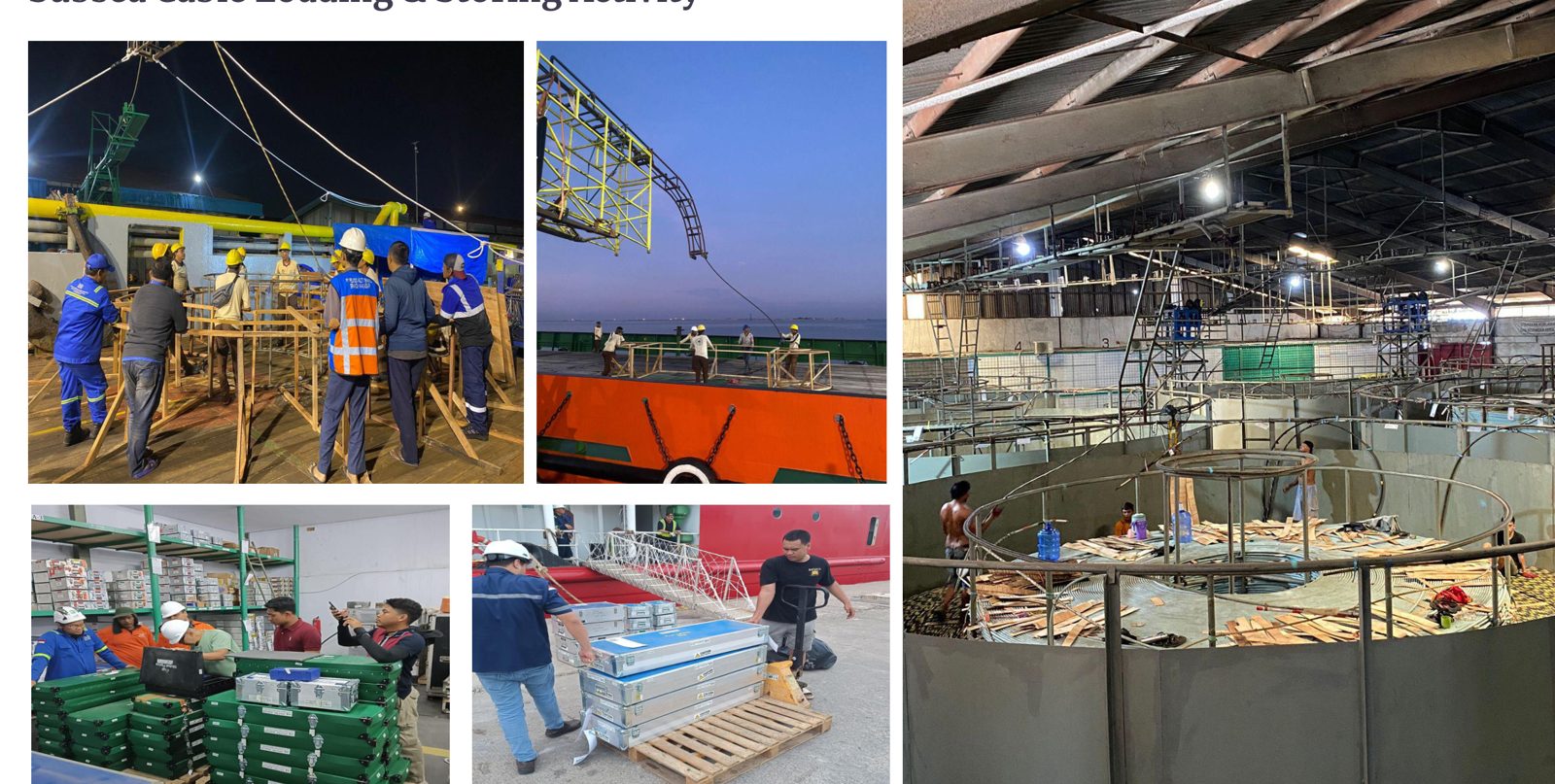
Receive, inspect, store and control cable, repeaters, branching units, joints and accessories; maintain traceability and prepare load-out sequences.
Prepare vessel, loading spread, cable highway, cable engines, instrumentation, jointing area and deck arrangement; load cable to the planned sequence.
Execute shore-end and main-lay activities with controlled pay-out, tension monitoring, navigation and appropriate burial or protection method.
Perform optical and electrical checks as applicable, verify cable integrity, document route position and close out installation records.
Respond to cable faults with fault localization, mobilization, recovery, jointing, re-lay, protection, post-repair testing and final documentation.
Actual configuration is project- and vessel-dependent. Typical work packages may include:
Beach or landing-point preparation, shore-end pull, nearshore handling, transition to marine spread and stabilization/protection in shallow water.
Controlled cable pay-out from tanks or carousel through cable machinery while maintaining route position, tension limits, minimum bend radius and operational speed.
Cable is laid while a plough or burial tool protects it below the seabed where soil and route conditions allow.
ROV trencher or jetting equipment follows the laid cable to achieve target burial depth in selected sections.
Use of articulated pipe, cable protection systems, mattresses, rock placement, cement bags, clamps or other engineered protection where burial is not feasible.
Engineering and controlled installation at pipeline/cable crossings, steep slopes, congested corridors or environmentally sensitive areas.
Equipment is selected according to water depth, cable design, burial target, seabed conditions and vessel configuration. Typical categories include:
Submarine systems may use lightweight (LW), lightweight protected, single-armored (SA) or double-armored (DA) cable depending on depth, seabed exposure and external-aggression risk. System components can also include repeaters, branching units, beach joints, universal joints and shore-end protection.
Depot management is a critical part of maintenance readiness. WEB supports cable storage strategy, inventory control, preservation, inspection, handling, load-out planning, labor coordination and delivery to the vessel so spare cable and accessories are ready when a repair window opens.
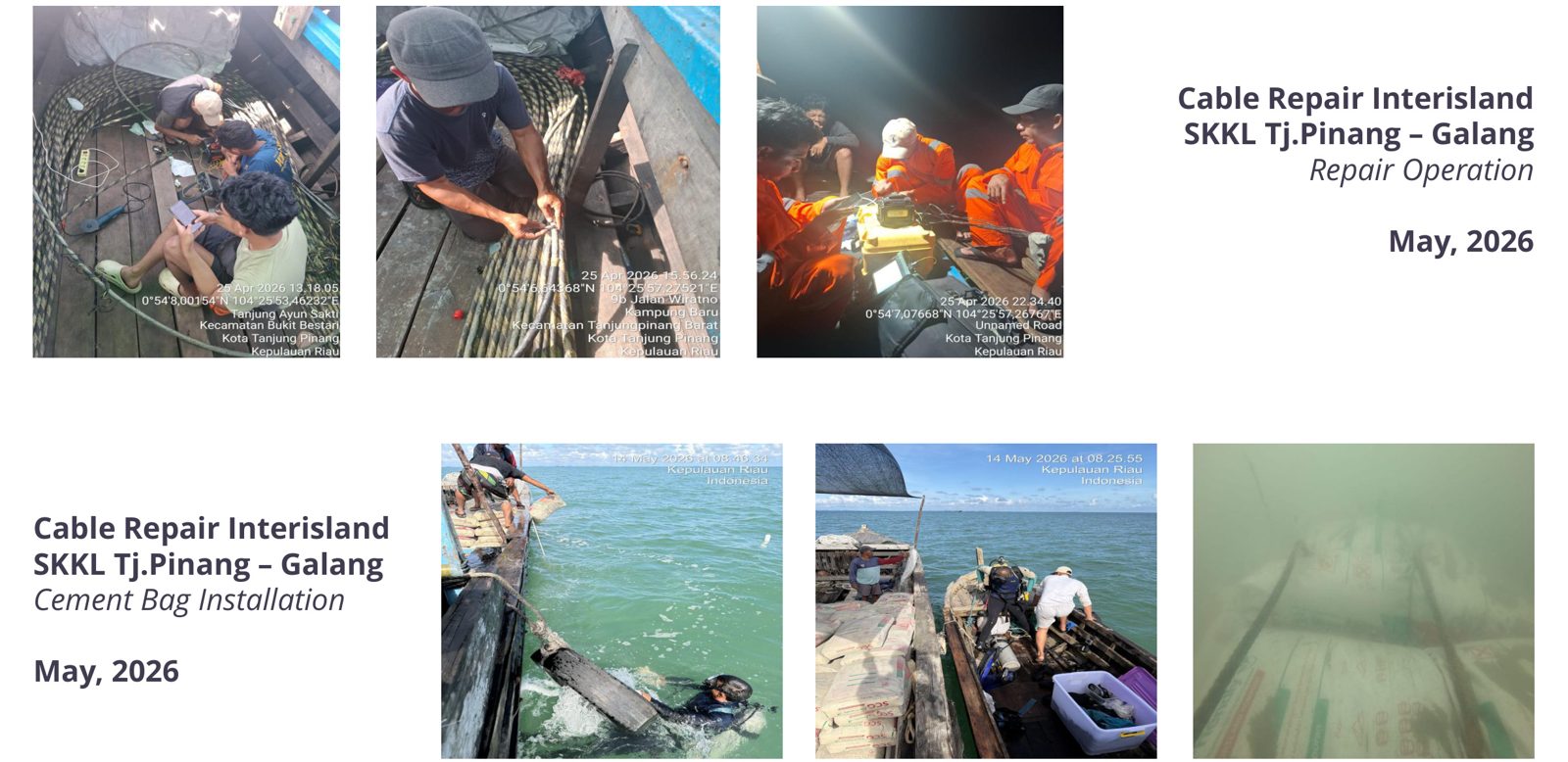
Cable repair activity recorded in the company profile.
Cable repair project supporting inter-island connectivity.
Repair operation followed by burial work using a jet sled.
Repair operation and cement-bag protection installation.
Repair, cement-bag / clamp work and additional protection activities recorded in the company profile.
The current experience register contains 21 submarine cable work packages from 2020 to 2026. It includes main lay, shore-end work, route engineering, cable protection, fault finding, repair, spare-cable deployment, jointing, burial and inspection. Some cable systems appear in multiple entries because they represent separate work packages or separate fault events.
Not specified in current register
Not specified in current register
Not specified in current register
Not specified in current register
Not specified in current register
Not specified in current register
Not specified in current register
Not specified in current register
Not specified in current register
Not specified in current register
WEB can discuss project scope, marine spread, cable logistics, repair readiness and partnership structure.